
Last updated: September 26, 2026
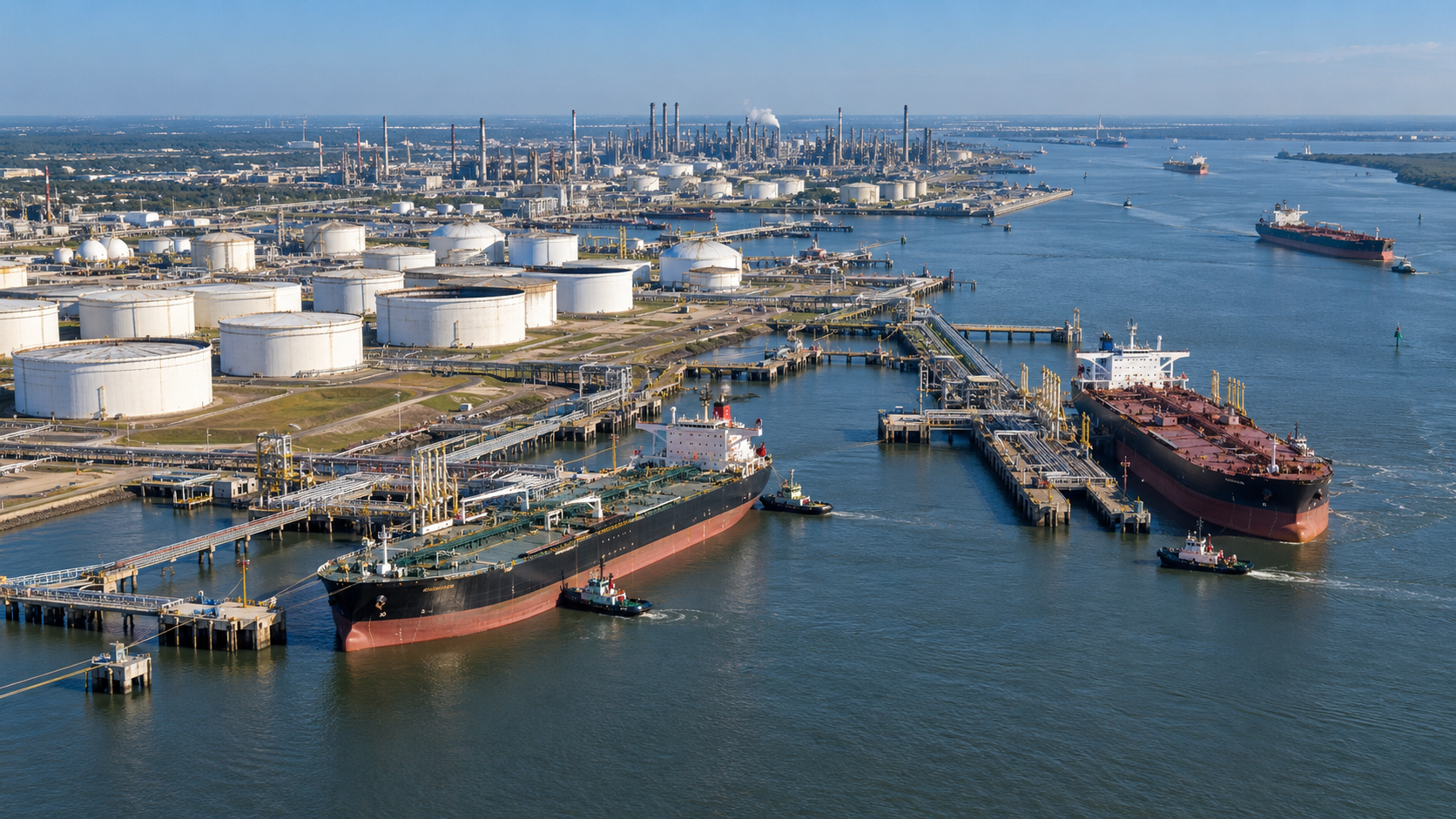
U.S. crude oil imports and exports can appear contradictory. The United States produces more crude oil than any other country, yet it still imports millions of barrels each day while exporting substantial volumes of domestically produced crude.
The explanation is not simply that the country has too much or too little oil. Crude oils have different physical qualities, American refineries were built and upgraded to process particular grades, and pipelines, ports, transportation costs and international prices influence where each barrel is most valuable.
In simple terms, the United States often exports some of the light, low-sulfur crude produced from its shale fields while importing heavier grades that many domestic refineries were designed to process efficiently.
This guide explains why the U.S. exports crude oil while importing crude oil, how refinery design affects those decisions and why importing oil does not mean domestic production is unavailable.

The Short Answer
The United States imports and exports crude oil at the same time because the crude produced domestically does not always match the crude that every American refinery is configured to process most profitably.
Much of the growth in U.S. production has come from shale formations that produce relatively light, sweet crude oil. Meanwhile, several large and sophisticated U.S. refineries—particularly along the Gulf Coast—have invested heavily in equipment capable of processing heavier, higher-sulfur crude.
As a result:
- Some U.S. light crude is exported to foreign refineries that value it highly.
- U.S. refineries continue importing heavier crude that suits their equipment.
- Canadian crude flows efficiently to American refineries through established pipelines.
- Transportation costs and regional infrastructure affect which refinery receives each barrel.
- Companies buy and sell crude according to quality, price, location and expected refining value.
The simultaneous movement of imports and exports is therefore a feature of an interconnected market—not evidence that the country is simply shipping away oil it needs and replacing it with an identical product.
How Much Crude Oil Does the U.S. Produce, Import and Export?
According to the U.S. Energy Information Administration, U.S. crude oil production, including lease condensate, averaged a record 13.6 million barrels per day in 2025.
The country also imported approximately 6.2 million barrels per day of crude oil during 2025. At the same time, crude oil exports averaged approximately 4 million barrels per day.
Imports exceeded exports, leaving the United States a net importer of crude oil by approximately 2.2 million barrels per day. However, the country remained a net exporter when crude oil and the broader range of finished petroleum products were considered together.
These figures demonstrate an important distinction:
- Crude oil trade covers unrefined petroleum entering or leaving the country.
- Petroleum trade can include crude oil, gasoline, diesel, jet fuel, propane and other products.
- Total energy trade also includes natural gas, coal, electricity and other energy sources.
Saying that the United States is a major energy exporter does not mean it has stopped importing every type of energy or crude oil.
Not All Crude Oil Is the Same
Crude oil is not a single uniform commodity. Different crude grades have different densities, sulfur levels, acidity, metal content and expected refining yields.
Two particularly important characteristics are density and sulfur content.
Light Versus Heavy Crude Oil
Density is commonly expressed using API gravity. Crude with a higher API gravity is generally lighter, while crude with a lower API gravity is heavier.
Light crude usually contains a larger proportion of hydrocarbons that can be converted into valuable products such as gasoline, diesel and jet fuel with relatively straightforward processing.
Heavy crude contains more large hydrocarbon molecules. Producing high-value transportation fuels from it generally requires more complex processing equipment.
Sweet Versus Sour Crude Oil
Sweet crude has relatively low sulfur content, while sour crude contains more sulfur. Refineries processing sour crude require suitable equipment to remove sulfur and meet fuel and environmental specifications.
The EIA’s refining guide explains how crude-oil characteristics influence refinery processing and product yields.
Other characteristics also matter. Two crude grades described as light and sweet may still have different yields, contaminants, transportation costs and values to a particular refinery.

What Type of Crude Oil Does the U.S. Produce?
Much of the increase in U.S. crude production since the shale revolution has consisted of light, relatively low-sulfur crude and condensate.
The Permian Basin of Texas and New Mexico has become the country’s largest producing region. Other important production areas include the Bakken, Eagle Ford, offshore areas and fields in Alaska and several other states.
In 2025, the Permian Basin alone accounted for approximately 48% of U.S. crude production. Continued improvements in drilling productivity and operational efficiency helped national production reach a record level.
Light crude is valuable and can be processed by American refineries. The issue is not that domestic refineries are completely unable to use it. Rather, some refineries have limits on how much light crude they can process efficiently without changing their equipment, operating plans or product mix.
When domestic production exceeds the amount that nearby refineries want to process at competitive prices, exporting some of that crude can make commercial sense.
Why U.S. Refinery Design Matters
A refinery is not a simple machine that processes every crude grade in exactly the same way. Each facility has a particular configuration based on its equipment, location, historical supply sources and intended product output.
Many large U.S. Gulf Coast refineries invested billions of dollars in complex processing equipment, including cokers, crackers, hydrotreaters and sulfur-removal units. These investments allow them to turn discounted heavy, sour crude into gasoline, diesel, jet fuel and other valuable products.
Before the rapid growth of U.S. shale production, refiners expected significant supplies of heavier crude from countries such as Canada, Mexico and Venezuela and from producers in the Middle East. Refinery investments were made with those supply patterns in mind.
Those facilities did not suddenly become economically irrelevant when U.S. light-crude production increased. If a complex refinery can purchase heavy crude at an attractive discount and convert it efficiently into valuable fuels, continuing to import that crude may be profitable.
Refineries also manage a “crude slate”—the combination of different crude grades processed during a particular period. A refinery may blend light and heavy grades to achieve the characteristics that best suit its equipment.
For readers who need a broader explanation of refining within the industry, see our guide to upstream, midstream and downstream oil and gas.

Why the U.S. Imports Heavy Crude Oil
The United States imports crude oil for several connected reasons.
1. Heavy Crude Matches Complex Refinery Equipment
Several American refineries were specifically designed or upgraded to process heavier grades. Purchasing suitable imported crude allows those refineries to use their expensive conversion equipment effectively.
2. Heavy Crude May Trade at a Discount
Heavy, sour crude generally requires more processing than light, sweet crude. It may therefore trade at a discount, although the size of that discount changes with supply, demand, transportation and refinery conditions.
A sophisticated refinery may be able to purchase discounted heavy crude and still produce profitable volumes of gasoline, diesel and other products.
3. Established Pipelines Support Imports
Extensive pipelines connect Canadian production with refineries in the U.S. Midwest and Gulf Coast. Once this infrastructure exists, it can provide a reliable and commercially efficient supply route.
4. Refineries Need Reliable Feedstock
Refineries are expensive facilities designed to operate continuously for long periods. They need dependable supplies with predictable characteristics. Long-standing relationships and term contracts with foreign suppliers can help maintain that reliability.
5. Some Regions Have Better Access to Foreign Crude
A coastal refinery may be able to receive a foreign cargo by tanker more economically than obtaining a particular domestic grade from a distant production basin with limited pipeline connections.
The decision depends on the delivered cost and refining value—not simply whether the crude was produced inside or outside the United States.
Why the U.S. Exports Light Crude Oil
U.S. crude oil exports increased rapidly following the growth of shale production and the removal of most export restrictions in 2015.
1. Domestic Production Includes Large Volumes of Light Crude
Shale fields produce substantial volumes of light crude. When available supply exceeds the amount that domestic refiners wish to purchase at competitive prices, producers and traders look for buyers overseas.
2. Foreign Refineries Want Light, Sweet Crude
Refineries that lack highly complex conversion equipment may prefer light crude because it can yield valuable products with less intensive processing.
American light crude can therefore compete in Europe, Asia and other international markets.
3. Exports Can Improve the Producer’s Price
If domestic buyers offer a significant discount while an overseas refinery offers a better net price after transportation costs, exporting may provide greater value to the producer.
4. Gulf Coast Export Infrastructure Has Expanded
Pipelines now move large volumes from producing regions to the Gulf Coast. Export terminals, storage facilities and port infrastructure have also expanded to handle more international shipments.
5. Global Buyers Seek Diverse Sources
Refiners may purchase crude from several countries to reduce dependence on a single supplier, respond to sanctions or disruptions, and optimize their crude slate.
U.S. light crude gives international buyers an additional supply option.
How Geography and Logistics Affect Trade
Oil does not move automatically from the nearest well to the nearest refinery. Pipelines, storage terminals, ports, shipping routes, transportation costs and contractual commitments shape the actual movement of crude.
For example:
- Canadian crude can move south through established pipelines to Midwestern refineries.
- Permian crude can move through pipelines to Gulf Coast refineries and export terminals.
- A Gulf Coast terminal can load U.S. crude onto tankers for overseas buyers.
- An East Coast refinery may have easier maritime access to imported crude than pipeline access to some inland U.S. production.
- Refineries in different regions may require different crude qualities.
Pipeline capacity, tariffs, shipping costs, port limitations and temporary maintenance can change the most economical route.
This is why physical oil trading is based on the product’s quality and delivered value at a particular location—not merely the national totals for production and consumption.
Our guide to how physical oil and gas trades work explains how pricing, logistics, inspection, title transfer and delivery connect producers with final buyers.
Why Canada Is an Important U.S. Supplier
Canada is the largest foreign supplier of crude oil to the United States. Much of Canadian production consists of heavier crude that is well suited to complex American refineries.
Geography and infrastructure strengthen this relationship. A large pipeline network connects Canadian production areas with refineries in the U.S. Midwest and Gulf Coast. These routes support dependable, high-volume deliveries without requiring every barrel to travel by ocean tanker.
Canadian crude also supports refineries in regions where domestic light crude may not provide the most profitable feedstock mix.
The U.S.–Canada relationship demonstrates why imports are not determined solely by a lack of domestic production. Quality compatibility, transportation infrastructure and refinery economics are equally important.
How the End of Export Restrictions Changed the Market
For decades, most U.S. crude-oil exports were restricted, although certain exceptions existed. In December 2015, legislation removed the general requirement for a licence to export domestically produced crude oil.
After the restrictions were removed, U.S. producers gained broader access to international buyers. Exports increased as shale production grew and pipelines and terminals expanded.
This did not eliminate U.S. imports. Removing the restrictions allowed light domestic crude to reach refineries that valued it, while American refineries continued purchasing imported grades that matched their equipment.
The result was a more flexible trade system in which crude could move toward the market offering the strongest net value after accounting for transportation and other costs.
Can the U.S. Be an Importer and Exporter at the Same Time?
Yes. A country can import and export the same broad commodity when the individual products, qualities, locations and commercial needs differ.
The United States remained a net importer of crude oil in 2025 because crude imports exceeded crude exports. However, it exported more total petroleum than it imported after finished products and other petroleum liquids were included.
A refinery can import heavy crude, process it and export diesel or gasoline. At the same time, a producer can export light crude to a foreign refinery.
Those transactions involve different companies, crude grades, regions and customers. National trade statistics combine them, but commercial decisions are made cargo by cargo and refinery by refinery.
Importing and exporting simultaneously is also common in other commodity markets. Trade allows products to move to locations where their quality and value best match demand.
Do Crude Oil Exports Raise U.S. Gasoline Prices?
Gasoline prices are influenced by many factors, including global crude prices, refinery operating costs, fuel specifications, seasonal demand, inventories, distribution expenses, taxes and local market conditions.
Crude oil is traded in an interconnected global market. Restricting exports would not automatically separate U.S. fuel prices from international supply and demand.
Export access can support domestic production by giving producers more potential buyers. At the same time, disruptions to global supply can affect benchmark prices paid by refiners and ultimately influence fuel prices.
The relationship is therefore more complicated than assuming every exported barrel directly removes one barrel of gasoline from American consumers. Crude oil must first be compatible with a refinery, transported to it and converted into the products demanded by the market.
Could the U.S. Stop Importing Crude Oil?
In a purely physical sense, the United States could attempt to reduce imports further by changing refinery operations, increasing domestic pipeline connections, adjusting production and making additional investments.
However, eliminating imports would not necessarily be the most efficient or least expensive outcome.
Some refineries would need to replace economically attractive heavy crude with lighter domestic grades. They might operate expensive conversion equipment less efficiently, change their product yields or require additional investment.
Refineries and producers would also have to overcome regional transportation constraints. A domestic barrel located far from a particular refinery may cost more to deliver than an imported barrel arriving through established infrastructure.
The relevant commercial question is not simply, “Can the U.S. produce oil?” It is, “Which crude grade can reach a particular refinery at the right time, quality and delivered cost?”
A Simplified Example
Consider two companies operating in the United States.
A shale producer in Texas produces light, sweet crude. A foreign refinery is willing to pay a competitive price for that crude because it fits the refinery’s relatively simple configuration. The producer ships the crude through a Gulf Coast export terminal.
Meanwhile, a complex Gulf Coast refinery purchases heavy Canadian or other imported crude at a discount. The refinery uses its cokers, crackers and sulfur-removal equipment to convert the heavier crude into gasoline, diesel, jet fuel and other products.
In this example, the United States records both a crude export and a crude import. Neither transaction is inherently contradictory:
- The exported light crude receives strong demand abroad.
- The imported heavy crude matches the American refinery’s equipment.
- Both transactions are influenced by delivered cost and expected refining value.

Common Misunderstandings
“Imported and Domestic Crude Are Identical”
They may differ significantly in density, sulfur, contaminants, yield, location and value to a particular refinery.
“The U.S. Exports Oil Because It Has More Than It Can Use”
The country produces large volumes, but export decisions also reflect crude quality, refinery demand, geography and international prices.
“Imports Prove the United States Does Not Produce Enough Oil”
Import totals alone do not explain refinery requirements. The United States can produce record volumes and still import grades that suit particular facilities.
“Every U.S. Refinery Wants Heavy Crude”
Refinery configurations vary. Some facilities process lighter crude, while others are more capable of handling heavy, sour feedstock. Crude slates can also change with prices and operating conditions.
“Energy Independence Means Zero Imports”
Energy independence has no single universally accepted commercial definition. A country can be a net energy exporter and continue importing certain products or grades when doing so is economically and operationally useful.
“Stopping Exports Would Automatically Lower Fuel Prices”
Fuel prices depend on global crude markets, refinery capacity, product supply, distribution, taxes and other factors. Export restrictions would create several effects and would not guarantee a simple one-for-one reduction at the pump.
Frequently Asked Questions
Why does the U.S. import oil when it produces so much?
The United States imports crude because some domestic refineries are optimized for heavier grades, established pipelines provide reliable foreign supplies and imported crude can sometimes offer better delivered value.
What kind of crude oil does the United States export?
Much of the exported crude is relatively light and low in sulfur, reflecting the characteristics of significant U.S. shale production. The exact quality varies by production region and export stream.
What kind of crude oil does the United States import?
The United States imports several grades, but imported supplies include substantial volumes of heavier crude that can be processed by complex refineries.
Where does most imported U.S. crude come from?
Canada is the largest supplier. The United States also imports crude from Mexico, countries in the Middle East and other producers, although volumes change over time.
Where does U.S. crude oil go when it is exported?
U.S. crude is sold to buyers in Europe, Asia, Canada and other international markets. Destinations vary according to refinery demand, freight costs, prices and geopolitical conditions.
Is the United States a net oil exporter?
The answer depends on what is being measured. In 2025, the United States remained a net importer of crude oil but was a net exporter of total petroleum when refined products and other petroleum liquids were included.
Can a refinery process both light and heavy crude?
Many refineries can process a range of grades, but they have operational limits and preferred crude slates. Profitability depends on crude prices, equipment, capacity and expected product yields.
Why not send all American crude to American refineries?
Not every domestic barrel is the best technical or economic match for every refinery. Pipeline access, transportation costs, crude quality and international demand affect where it is sold.
Final Thoughts
U.S. crude oil imports and exports make more sense once crude quality, refinery design and geography are considered.
The United States produces large volumes of light crude, much of it from shale regions. Some of that crude is exported to overseas refineries that value its characteristics. At the same time, complex American refineries import heavier crude that fits equipment originally built or upgraded to process those grades.
Canada’s pipeline connections, Gulf Coast port infrastructure, regional transportation costs and international market prices also influence where individual barrels move.
The United States is therefore not exporting and importing identical barrels for no reason. It participates in a highly connected market in which different crude grades move toward the refineries and buyers that can use them most effectively.
Disclaimer: This article is provided for general educational purposes only. It does not constitute investment, trading, legal, tax, regulatory or financial advice. Energy data, trade flows and market conditions change over time. Consult current official information and qualified professionals when making commercial or investment decisions.