Last updated: September 22, 2026
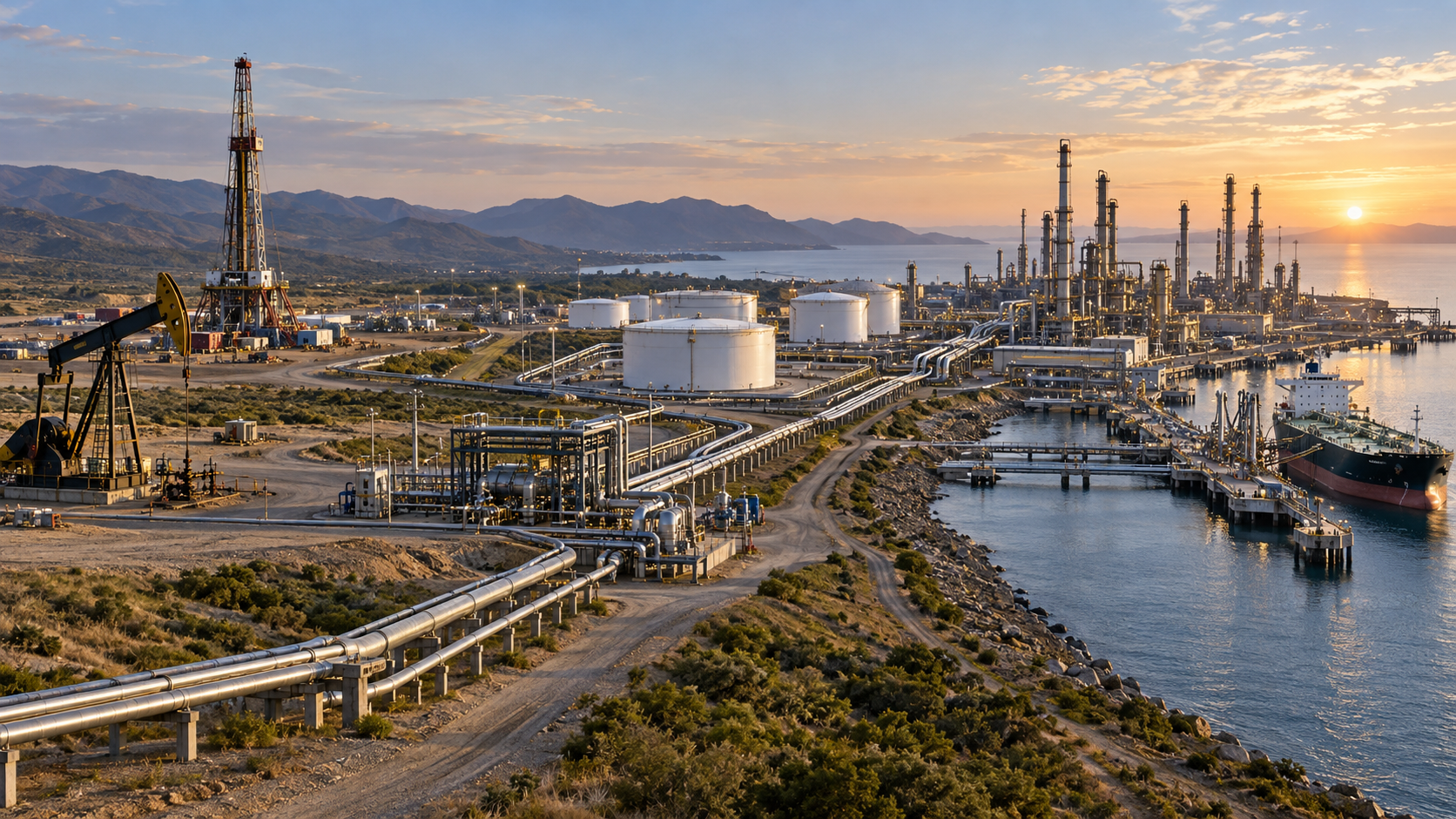
Upstream, midstream and downstream oil and gas are the three main segments of the petroleum industry. Upstream companies find and produce crude oil and natural gas. Midstream businesses gather, process, transport and store them. Downstream companies refine, distribute and sell the fuels and products used by consumers and businesses.
These three segments form a connected value chain. A barrel of crude oil is not useful to most consumers when it first leaves a well. It must be collected, transported, refined into usable products and delivered to the market.
Natural gas follows a similar journey. Gas produced from a well may need treatment and processing before it can move through transmission pipelines, enter storage, reach a distribution network or be converted into liquefied natural gas.
This guide explains the meaning of upstream, midstream and downstream operations, the activities and facilities found in each segment, how companies earn money and why the boundaries are not always identical in every transaction or jurisdiction.
If you are new to the sector, our Ultimate Guide to Oil and Gas Terminology explains many of the abbreviations and commercial terms used throughout the industry.
Table of Contents
- The Three Oil and Gas Segments at a Glance
- What Is the Upstream Oil and Gas Sector?
- What Is the Midstream Oil and Gas Sector?
- What Is the Downstream Oil and Gas Sector?
- How Oil and Natural Gas Move Through the Value Chain
- Upstream vs. Midstream vs. Downstream
- Integrated and Independent Oil and Gas Companies
- How the Three Segments Make Money
- Major Risks in Each Segment
- Jobs and Careers Across the Value Chain
- Frequently Asked Questions
The Three Oil and Gas Segments at a Glance
The simplest way to understand the petroleum value chain is to ask three questions:
- Where is the oil or gas, and how do we produce it? That is primarily upstream.
- How do we collect, process, transport and store it? That is primarily midstream.
- How do we convert it into usable products and sell them? That is primarily downstream.
Swipe left to view all columns →
| Segment | Main Purpose | Typical Activities | Common Facilities |
|---|---|---|---|
| Upstream | Find and produce hydrocarbons | Exploration, drilling, well completion and production | Oilfields, gas fields, drilling rigs, wells and offshore platforms |
| Midstream | Move, process and store hydrocarbons | Gathering, processing, transportation, terminaling and storage | Pipelines, compressor stations, tank farms, terminals and gas-processing plants |
| Downstream | Refine, distribute and market products | Refining, product blending, wholesale distribution and retail sales | Refineries, petrochemical plants, depots and service stations |
This division is useful, but it is not perfect. Some activities sit near the boundary between two segments. Natural-gas processing, liquefied natural gas infrastructure, product pipelines and petrochemicals may be classified differently depending on the company, country or purpose of the analysis.
The classification should therefore be used as a practical framework rather than an inflexible legal definition.
Together, upstream, midstream and downstream oil and gas activities cover the journey from underground resources to finished products used in daily life.
What Is the Upstream Oil and Gas Sector?
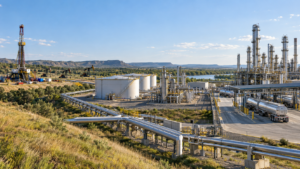
The upstream sector is often called exploration and production, or E&P. Its purpose is to locate underground or subsea hydrocarbon resources and bring commercially recoverable oil and gas to the surface.
Exploration
Exploration begins with studying areas that may contain hydrocarbons. Geologists and geophysicists examine rock formations, geological history and seismic data to identify possible traps where oil or gas may have accumulated.
A company must usually obtain the appropriate licence, lease or contractual right before exploration and production. The exact system varies by country. Governments may use concessions, production-sharing contracts, service contracts or other arrangements.
Exploration is uncertain. Seismic evidence can indicate a promising structure, but a discovery is not confirmed until drilling and evaluation provide better information.
Drilling and Appraisal
An exploration well is drilled to test whether hydrocarbons are present. If oil or gas is discovered, appraisal wells and technical studies help determine the size, quality, pressure and commercial potential of the accumulation.
Not every discovery becomes a producing field. Companies must consider expected production, development costs, infrastructure, prices, fiscal terms, environmental obligations and political or regulatory risks.
Field Development and Production
If a discovery is commercially viable and receives the required approvals, the operator prepares a development plan. This can involve production wells, gathering lines, processing equipment, storage, offshore platforms or subsea systems.
During production, reservoir and production teams manage the field to recover hydrocarbons safely and efficiently. Wells may initially flow using natural reservoir pressure. Pumps, gas lift, water injection or other recovery methods may later be used to support output.
Common Upstream Participants
- National oil companies
- International and independent exploration companies
- Drilling contractors
- Oilfield service companies
- Seismic and geological contractors
- Engineering and equipment suppliers
An oilfield service company may work extensively in upstream operations without owning the oil or gas reserves. Ownership, operating responsibility and service provision are different roles and should not be confused.
Within the upstream, midstream and downstream oil and gas value chain, upstream is the starting point because there is nothing to transport or refine until hydrocarbons have been discovered and produced.
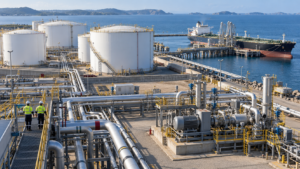
What Is the Midstream Oil and Gas Sector?
The midstream sector connects production areas with refineries, processing facilities, export terminals and consuming markets. The American Petroleum Institute describes midstream activities as including the gathering, processing, storage and transportation of oil and natural gas.
Gathering
Gathering systems collect crude oil or natural gas from producing wells. Smaller lines connect individual wells or field facilities to central processing plants, storage locations or larger transmission systems.
Produced fluids may contain oil, gas, water and impurities. Field equipment can separate these streams before further processing or transportation.
Natural-Gas Processing
Raw natural gas can contain water vapour, carbon dioxide, hydrogen sulphide, nitrogen and natural gas liquids. Processing removes unwanted components and separates valuable liquids so that the gas can meet pipeline or market specifications.
Natural gas liquids may then be separated into products such as ethane, propane, normal butane, isobutane and natural gasoline through fractionation.
Transportation
Midstream transportation can involve:
- Crude-oil and natural-gas pipelines
- Petroleum-product pipelines
- Oil and LNG tankers
- Barges and inland waterways
- Rail transport
- Tanker trucks
Pipelines are especially important for moving large volumes over land. Natural-gas transmission systems use compressor stations to maintain pressure, while liquid pipelines use pumping stations.
Storage and Terminals
Storage helps balance production and demand, supports refinery operations and provides inventory for trading or emergency needs. Crude oil and petroleum products may be stored in above-ground tanks or underground caverns. Natural gas can be stored in depleted reservoirs, aquifers, salt caverns or LNG tanks.
Terminals receive, store, blend and transfer products between pipelines, ships, railcars and trucks. A terminal operator does not necessarily own the product stored at its facility.
Why Midstream Matters
A productive oilfield has limited value if there is no practical way to move its output. A refinery cannot operate reliably without feedstock, storage and transportation. Midstream infrastructure is the physical bridge that keeps the wider value chain functioning.
For this reason, upstream, midstream and downstream oil and gas operations are commercially interdependent even when separate companies own the relevant assets.
What Is the Downstream Oil and Gas Sector?
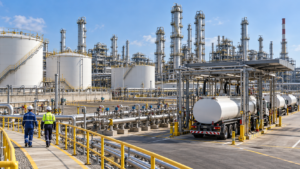
The downstream sector converts crude oil and other feedstocks into products that can be sold to industrial users, businesses and consumers. It generally includes refining, product distribution and marketing.
Crude-Oil Refining
A refinery separates and transforms crude oil into useful products. The first major stage is typically atmospheric distillation, which separates components according to their boiling ranges.
Additional units convert heavier fractions, remove contaminants and improve product quality. Refinery configuration determines which crude grades a facility can process efficiently and what combination of products it can produce.
Common refinery products include:
- Gasoline
- Diesel and gas oil
- Jet fuel
- Liquefied petroleum gases
- Fuel oil
- Lubricants
- Asphalt and bitumen
- Naphtha and other petrochemical feedstocks
The U.S. Energy Information Administration explains that crude oil and other hydrocarbon liquids are refined into petroleum products used for transportation, heating, electricity generation, road construction and as feedstocks for chemicals, plastics and synthetic materials.
Distribution and Marketing
After refining, products move through pipelines, terminals, depots, ships, railcars and trucks. Wholesale marketers may supply airlines, power plants, factories, transport companies and independent retailers.
Retail operations include service stations and other outlets that sell fuels, lubricants or related products to final consumers.
Petrochemicals
Petrochemical plants convert hydrocarbon feedstocks into building blocks used in plastics, fertilizers, solvents, fibres, detergents, pharmaceuticals and thousands of manufactured products.
Some organizations treat petrochemicals as part of downstream operations, while others analyze them as a connected industrial sector. The correct classification depends on context.
Downstream is the stage of upstream, midstream and downstream oil and gas that most consumers encounter directly through fuels, lubricants, plastics and other finished products.
How Oil and Natural Gas Move Through the Value Chain
A Simplified Crude-Oil Journey
- Geological and seismic studies identify a possible hydrocarbon structure.
- An exploration well tests the prospect.
- A commercial discovery is appraised and developed.
- Production wells bring crude oil to the surface.
- Gathering systems move it to field facilities or storage.
- A pipeline, tanker, railcar or truck transports it to a refinery.
- The refinery converts it into fuels and other products.
- Products move through terminals and distribution networks.
- Businesses and consumers purchase and use the finished products.
A Simplified Natural-Gas Journey
- Natural gas is discovered and produced from a well.
- Field equipment separates gas from oil, water and other materials.
- A gathering network moves the gas to a processing facility.
- The gas is treated to meet transportation and market specifications.
- Transmission pipelines move it over long distances.
- Storage facilities help balance seasonal and daily demand.
- Local distribution networks deliver gas to homes and businesses, or large users receive it directly.
Gas intended for international LNG trade undergoes additional steps. It is liquefied at a specialised facility, carried by an LNG vessel and converted back into gas at a regasification terminal before entering a pipeline network.
The exact route varies. Some crude oil is exported rather than refined domestically, some gas is used near the production site, and some petroleum products pass through several storage and trading locations before reaching consumers.
Upstream vs. Midstream vs. Downstream: Key Differences
| Factor | Upstream | Midstream | Downstream |
|---|---|---|---|
| Core activity | Finding and producing resources | Gathering, processing, transporting and storing | Refining, distributing and marketing products |
| Typical output | Produced crude oil and raw natural gas | Transported or processed hydrocarbons | Finished fuels and petroleum-based products |
| Major assets | Licences, reserves, wells, rigs and platforms | Pipelines, terminals, tanks and processing plants | Refineries, depots, petrochemical plants and retail networks |
| Major commercial driver | Production volumes, costs and commodity prices | Throughput, capacity, tariffs and contracts | Refining margins, product demand and retail margins |
| Examples of risk | Dry wells, reservoir uncertainty and price declines | Leaks, capacity constraints and volume changes | Margin pressure, outages and changing product demand |
Understanding these differences helps investors, jobseekers, buyers and new industry participants identify what a company actually does. A business described simply as an “oil company” might own producing fields, operate pipelines, run refineries, sell fuels—or perform only one specialized service.
Integrated and Independent Oil and Gas Companies
Some companies operate in more than one part of the value chain. These are commonly called integrated oil and gas companies.
A fully integrated company may produce crude oil, operate pipelines and terminals, own refineries and sell fuel through a retail network. Integration can provide operational coordination and some protection when business conditions differ between segments.
Other companies specialize:
- An independent E&P company may focus only on exploration and production.
- A pipeline company may earn fees for transporting third-party volumes.
- A storage company may operate tanks or caverns without owning the stored commodity.
- An independent refiner may buy crude oil and sell refined products.
- A fuel marketer may distribute products without owning a refinery.
When evaluating a supplier or business partner, verify the precise legal entity and its actual role. A company’s presence in one segment does not automatically give it authority or capacity in another. Our guide on how to verify authentic oil and gas offers provides a structured due-diligence process.
How Upstream, Midstream and Downstream Companies Make Money
Upstream Revenue
Upstream producers generally earn revenue by selling produced crude oil, natural gas and associated liquids. Profitability depends on production volumes, realized prices, royalties, taxes, operating expenses and the cost of finding and developing reserves.
Midstream Revenue
Many midstream companies charge fees for transportation, processing, storage or terminal services. Some contracts provide relatively stable payments based on reserved capacity or volumes handled. Other midstream businesses take ownership of commodities or earn margins from processing and marketing activities, which can create greater price exposure.
Downstream Revenue
Refiners earn the difference between the value of products sold and the cost of crude oil, energy and operations. This is commonly discussed through refining margins, although actual profitability also depends on refinery configuration, utilisation, maintenance, logistics and regional demand.
Distributors and retailers earn margins from moving and selling fuels and related products. High crude prices do not automatically mean every downstream business earns more; feedstock costs can rise faster than product prices.
For a broader introduction to prices, supply, demand and benchmarks, read our guide to understanding the oil and gas market.
Major Risks Across the Three Oil and Gas Segments
Upstream Risks
- Exploration failure and dry wells
- Uncertain reserves and reservoir performance
- Commodity-price volatility
- Cost overruns and project delays
- Well-control and operational incidents
- Political, fiscal and licensing changes
Midstream Risks
- Pipeline or storage leaks
- Insufficient throughput or unused capacity
- Dependence on particular producers or markets
- Construction and permitting delays
- Cybersecurity and operational disruption
- Changes in transport routes or regulation
Downstream Risks
- Weak refining or retail margins
- Refinery outages and maintenance costs
- Product-quality failures
- Environmental liabilities
- Changes in fuel specifications or consumer demand
- Feedstock and inventory-price exposure
All three segments face health, safety, environmental, legal and reputational risks. Strong controls, competent personnel, maintenance, emergency planning and transparent business procedures remain essential throughout the value chain.
Jobs and Careers Across the Oil and Gas Value Chain
The upstream, midstream and downstream oil and gas sectors require different combinations of technical, commercial and operational skills.
Typical Upstream Roles
- Geologist and geophysicist
- Petroleum, drilling and reservoir engineer
- Production technologist
- Rig and well-services personnel
- Offshore operations specialist
Typical Midstream Roles
- Pipeline and process engineer
- Terminal or storage operator
- Gas-processing technician
- Integrity and corrosion specialist
- Logistics and scheduling professional
Typical Downstream Roles
- Refinery process engineer
- Laboratory and product-quality specialist
- Maintenance and reliability engineer
- Fuel trader, marketer or distributor
- Retail and supply-chain manager
Finance, law, procurement, compliance, information technology, environmental management, human resources and health and safety professionals also work across all three segments.
Frequently Asked Questions
What is the main difference between upstream, midstream and downstream oil and gas?
Upstream finds and produces oil and gas. Midstream gathers, processes, transports and stores it. Downstream refines hydrocarbons into useful products and distributes or markets those products to customers.
Is drilling upstream or midstream?
Drilling is an upstream activity because it is directly connected to exploration, field development and hydrocarbon production.
Are pipelines upstream or midstream?
Long-distance transmission pipelines are generally classified as midstream. Short gathering lines inside or near a production field may sometimes be included in upstream operations, depending on the company or analysis.
Are refineries downstream?
Yes. Refining is a central downstream activity because refineries transform crude oil into gasoline, diesel, jet fuel and other usable products.
Where does LNG fit in the value chain?
The LNG chain crosses several segments. Gas production is upstream, while gathering and processing are generally midstream. Liquefaction, shipping and regasification are often treated as midstream, although some companies or analysts may classify parts differently.
Are petrol or gas stations downstream?
Yes. Service stations are part of downstream retail marketing because they sell finished fuels directly to consumers.
Can one company operate in all three sectors?
Yes. An integrated oil and gas company may operate producing fields, pipelines, terminals, refineries and retail networks. Other businesses specialize in only one activity or segment.
Is natural-gas processing midstream?
Natural-gas processing is commonly treated as midstream because it prepares raw gas for transportation and sale. However, field-level treatment can sometimes be included in upstream operations.
Which oil and gas segment is most profitable?
There is no permanently most-profitable segment. Results change with commodity prices, contract structures, operating costs, capacity utilisation, product demand, regulation and company efficiency.
Final Thoughts
Understanding upstream, midstream and downstream oil and gas makes the wider petroleum industry easier to follow.
Upstream companies locate reserves and produce hydrocarbons. Midstream companies provide the processing, transportation and storage links that connect fields to markets. Downstream companies turn crude oil and other feedstocks into useful fuels and materials and deliver them to customers.
The boundaries can overlap, particularly in natural-gas processing, LNG, product transportation and petrochemicals. What matters is understanding the actual activity, asset, contractual role and source of revenue rather than relying only on a broad industry label.
Before doing business with any oil and gas company, verify its legal identity, operating role and authority in the proposed transaction. A company active in one part of the value chain should not automatically be assumed to control products or facilities in another.
Disclaimer: This article is provided for general educational purposes only. It does not constitute legal, investment, engineering, financial, environmental or regulatory advice. Oil and gas classifications, contractual arrangements and regulatory requirements can vary by jurisdiction and transaction. Consult appropriately qualified professionals where necessary.